With our extensive experience in the industry, we have resolved real, complicated cases where valves were of importance and improved the operations of various brands. You can find cases that match your situation and we will provide tailor-made valve solutions for your applications.
On the front line of nuclear power plant safety, the reliability of main steam isolation valves is vital to the integrity of the entire unit. When prolonged exposure to high-velocity steam causes erosion of critical valve components, sealing performance deteriorates and significant safety risks emerge. One nuclear power station faced precisely this challenge: severe seat wear in the main steam pipeline butterfly valve of its pressurized water reactor. Continuous high-speed steam flow had compromised sealing reliability, threatening the plant’s safe operation. To resolve this nuclear-grade engineering issue, our team of valve specialists developed a comprehensive retrofit solution that meets the most stringent safety and performance standards.
Challenge
The plant encountered three major issues. First, the main steam velocity reached as high as 120 m/s, causing the original valve seat to wear at a rate exceeding 3 mm per year—far beyond the design threshold. This excessive wear led to increased leakage during valve closure, failing to meet the rigorous emergency isolation requirements of nuclear operations. Second, any retrofit solution had to comply with nuclear safety codes, specifically ASME Section III, Class 1, while enduring 100,000 operational cycles under demanding conditions.
Solution
Our nuclear equipment engineers employed Computational Fluid Dynamics (CFD) simulation and advanced material testing to develop a comprehensive dual-protection strategy. The first step was a material upgrade, replacing the original valve seat with a Stellite 6 alloy overlay that achieved a hardness of HRC 45 and increased wear resistance by a factor of eight. In parallel, the internal flow path was optimized through an innovative flow-guiding butterfly disc with a multi-stage pressure reduction design. This configuration effectively reduced local steam velocity by 40% and decreased erosive forces by 60%, significantly extending component life.
The retrofit solution underwent rigorous verification, including 2,000 thermal cycling tests and seismic qualification, all conducted in full accordance with ASME QME-1 standards. These comprehensive tests confirmed the design’s long-term stability, structural integrity, and compliance with nuclear-grade reliability requirements.
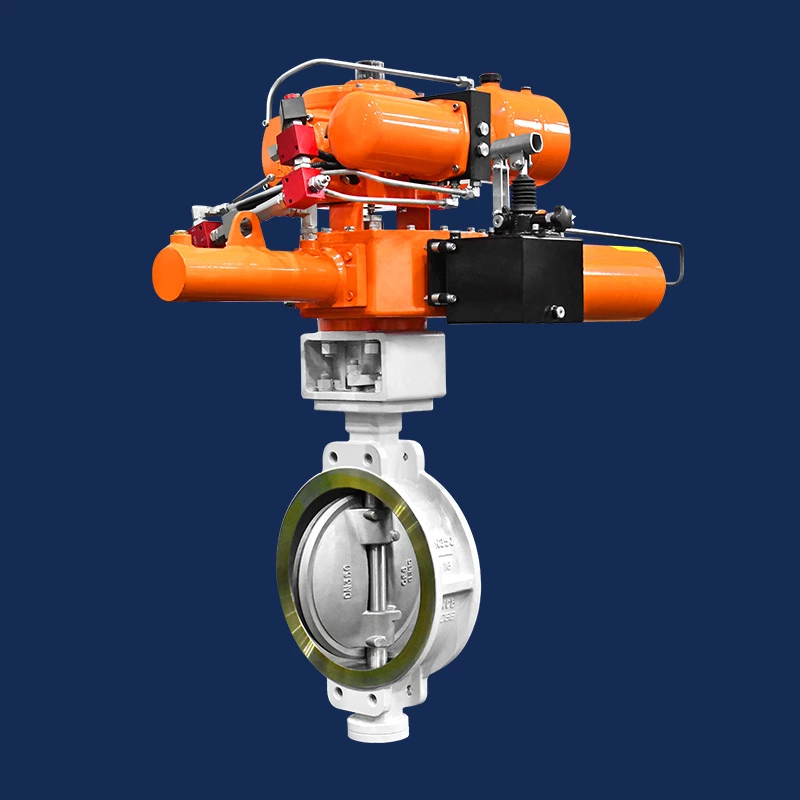
butterfly valve with a Stellite 6 alloy overlay seat
Result
The performance gains were substantial. The annual wear rate dropped from 3 mm to 0.45 mm—an 85% reduction, exceeding all design expectations. The valve achieved ASME Section III ND certification on its first submission, and its sealing performance reached ANSI B16.104 Class V standards. Service life increased from 5 years to 30 years, cutting lifecycle costs by 70% and reducing major outage maintenance needs by over ¥20 million per overhaul.
The retrofit has since been certified by the National Nuclear Power Engineering Technology Research Center and standardized for use in new-generation nuclear power plants across China.
Beyond Nuclear
Proven under the most demanding nuclear conditions, this technology is now being applied across other high-performance sectors, including supercritical thermal power units, IGCC syngas isolation valves, and high-pressure differential control valves in chemical processing. By extending nuclear-grade standards to industrial applications, this innovation redefines reliability—ensuring every valve can withstand the test of time.
The Lowest-Cost Strategy Is To Choose Reliable DomBor Valves.
DomBor Valve, with its experienced specialists, specializes in manufacturing industrial valves and provides technical support and one-stop solutions for the global market.